The Watercolor Lavender Collection: Hand-Painted Elegance for Creative Projects
If you have spent any time sourcing floral design assets, you already know that lavender occupies a unique space. It is soft without being saccharine, elegant without feeling stiff, and versatile enough to work across wedding stationery, brand identity, and casual social media posts. The Watercolor Lavender Collection offers exactly this kind of flexibility, but what sets it apart is the level of detail and the variety of formats bundled into a single download. Whether you are designing invitations, building a blog aesthetic, or producing printable wall art, understanding what this pack contains and how to use it can save you hours of sourcing and editing time.
What Makes This Collection Different
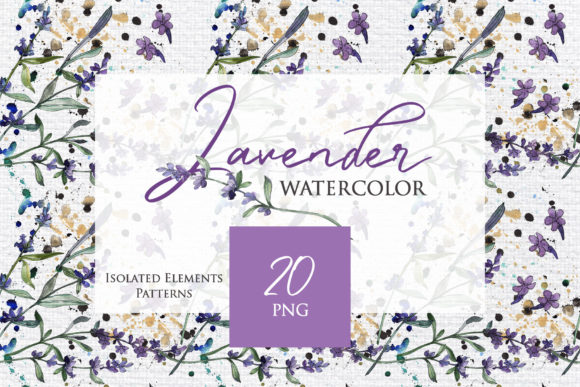
This is not a single illustration duplicated into a dozen files. The Watercolor Lavender Collection includes 20 separate PNG files covering frames, borders, patterns, and individual isolated elements. Every image was painted by hand, then scanned at 300 dpi to preserve the texture and subtle color transitions that define watercolor work. Because each element exists as its own file, you are free to layer, resize, recolor, and reposition without worrying about background interference. The PNG format means no white boxes or awkward edges—just the painted lavender against transparency.
The patterns and frames come as JPG files sized at 3500x3500 pixels, which gives you plenty of resolution for print projects like posters, greeting cards, or even fabric transfer designs. For digital work, that same resolution means sharp rendering on high-DPI screens and retina displays. The practical takeaway is this: you are not locked into one usage scenario. A single border element that works as a wedding invitation frame can also serve as a blog header accent or a product label backdrop.
The Structure of the Pack
Understanding the file structure helps you plan your workflow. The collection breaks down into several categories, each serving a different design function:
- Isolated elements: Individual lavender sprigs, leaves, and small clusters that you can place anywhere. These are ideal for compositing, creating custom layouts, or scattering across a background.
- Frames and borders: Pre-arranged layouts that wrap around text or images. Useful for greeting cards, quote graphics, and certificate designs where consistency matters.
- Patterns: Seamless or repeat-ready layouts that work for wrapping paper, website backgrounds, fabric design, or digital scrapbooking.
- Full compositions: Larger, more complex arrangements that can stand alone as poster art or social media templates.
Because everything is hand-painted, you get natural variation in stroke weight, pigment density, and edge softness. That organic quality is difficult to replicate with digital brushes alone, and it is one of the main reasons designers gravitate toward scanned watercolor assets for premium projects.
Practical Applications Across Real Projects
Let us move beyond the generic "use it for invitations" advice and look at specific, realistic scenarios where the Watercolor Lavender Collection delivers measurable value.
Wedding and Event Stationery
Lavender is a perennial favorite for rustic, botanical, and Provencal-themed weddings. With the isolated PNG elements, you can build a cohesive stationery suite that includes save-the-dates, ceremony programs, place cards, and thank-you notes without repeating the exact same composition. Use a border file for the invitation, then pull individual sprigs for smaller accent pieces. Because each file is separate, you can scale elements up or down without losing resolution. The 300 dpi PNGs print cleanly at standard invitation sizes, and the transparent background means you can drop them onto colored cardstock or textured paper without awkward halos.
Branding and Packaging for Small Businesses
If you run a business that sells lavender-infused products—soaps, candles, teas, skincare—this collection can become the visual foundation of your brand identity. The patterns work well as product wrapping paper or box liners, while the isolated elements can be used for logo components, social media badges, or ingredient list accents. Since the files are fully editable in terms of size and color, you can adjust the hue to match your specific brand palette without losing the hand-painted texture. That is a significant advantage over stock photography, which often resists color manipulation without looking artificial.
Blog and Social Media Content
Bloggers and content creators in the lifestyle, wellness, and gardening niches will find the collection particularly useful for creating consistent visual branding. A lavender border applied to blog post featured images creates immediate recognition across your feed. Quote graphics overlaid on a lavender pattern perform well on platforms like Instagram and Pinterest because the soft, organic background does not compete with text. The 3500x3500 JPG patterns give you room to crop for different aspect ratios while maintaining quality, which is essential when repurposing content across multiple social channels.
Greeting Cards and Printable Art
The greeting card market favors designs that feel personal and handcrafted. Using hand-painted watercolor elements aligns with that trend without requiring you to paint each card yourself. The frame files are particularly well-suited for sentiment-heavy designs—think sympathy cards, thank-you notes, or encouragement cards where the floral border frames the message without overwhelming it. For printable wall art, the full compositions can be printed at sizes up to 11x14 inches without noticeable pixelation, thanks to the 300 dpi resolution.
Usability and Practical Considerations
Working with a collection like this is straightforward, but there are a few practical points worth noting to get the most out of the files.
Editing the colors: Because the elements are PNG with transparent backgrounds, you can apply color adjustments in almost any image editor. If you need a softer purple or a muted green for the leaves, a hue/saturation layer in Photoshop or Affinity will get you there quickly. The hand-painted texture remains intact because you are shifting existing pigment values rather than applying a flat overlay.
Combining with other assets: The lavender elements pair naturally with other botanical watercolor sets, but they also work well against solid color backgrounds or minimalist typography. The key is to maintain the organic feel by avoiding harsh drop shadows or overly digital effects. A simple paper texture overlay can help the elements feel grounded in a digital layout.
File management: With 20 separate files, staying organized matters. The pack does not include a proprietary organizer, so you will want to rename files based on your own naming convention—especially if you plan to reuse elements across multiple projects. Grouping by element type (frames, borders, patterns, isolated) in your asset library saves time on future projects.
Who Benefits Most from This Collection
Based on the structure and resolution of the files, three groups tend to get the most value:
- Freelance designers and print-on-demand sellers who need versatile, high-resolution assets that can be adapted across multiple client projects or product listings without looking repetitive.
- Event planners and stationery designers who create custom wedding or event collateral and want a botanical theme that can be scaled from full-suite designs to small accent pieces.
- Small business owners in the natural products, wellness, or home decor space who need cohesive branding assets without hiring an illustrator for every label, post, and package insert.
That said, even casual users—hobbyists making birthday cards or teachers decorating classroom materials—will find the collection accessible because the PNG format requires no special software skills to use. You can drop elements into Canva, InDesign, or even Microsoft Word and get professional-looking results.
Observations on Quality and Value
The hand-painted origin of these illustrations is not a marketing gimmick; it is the reason the collection holds up under scrutiny. Digital watercolor assets often suffer from harsh edges, pixelated gradients, or unnatural color banding when scaled. The scanned approach used here retains the granulation and pooling that real watercolor creates, which gives the final output a tactile quality that flat digital graphics lack.
The 3500x3500 resolution for patterns and frames is generous enough for print use, and the 300 dpi PNGs for isolated elements mean you are not sacrificing quality for convenience. If you compare this to sourcing individual lavender illustrations from stock sites, the bundled pricing and variety of formats usually works out in your favor—especially if you need multiple element types for a single project.
One practical recommendation: before committing to a full design, test one or two elements at your intended output size and paper stock. Watercolor textures can appear slightly different on matte versus glossy paper, and a quick proof saves you from surprises during production runs. The files themselves handle this well because the transparency allows you to preview against your actual background paper color or texture.
Final Thoughts on Getting Started
The Watercolor Lavender Collection is best approached as a modular toolkit rather than a set of finished templates. Its strength lies in the flexibility of 20 separate, high-detail files that can be mixed, matched, and edited to fit your specific project requirements. Whether you are building a wedding suite from scratch, refreshing your brand packaging, or creating a series of quote graphics for social media, the hand-painted quality and transparent PNG format reduce the friction between concept and final output.
Start by identifying which of your current projects would benefit most from a consistent lavender theme. Pull the frame file for your highest-priority design, then use the isolated elements to fill in gaps or create variation. The collection rewards experimentation, and because nothing is locked behind a complex file structure, you can move from download to first use in a matter of minutes.