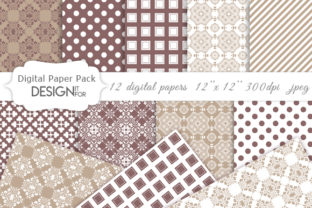
Damask Digital Paper Pack, Patterns: A Practical Resource for Professional Design Projects
Digital design assets often walk a fine line between aesthetic appeal and practical usability. The Damask Digital Paper Pack, Patterns and its companion Damask Digital Paper Pack, Textures represent a focused collection of twelve digital paper designs that aim to deliver on both fronts. For anyone working in visual communication, print production, or digital content creation, understanding what these packs offer and how they perform in real-world applications is essential before investing time or budget.
What the Damask Digital Paper Pack Offers
At its core, the Damask Digital Paper Pack, Patterns provides twelve distinct digital paper designs, each sized at 12 x 12 inches with a resolution of 300dpi in .jpg format. The companion Damask Digital Paper Pack, Textures extends this with an additional set of twelve texture-focused designs, maintaining the same dimensions and resolution standards. Damask patterns traditionally draw from ornate, symmetrical motifs with roots in woven silk fabrics from Damascus, and these packs interpret that heritage through a modern digital lens.
The file specifications are straightforward but important: 12 x 12 inches at 300dpi ensures high-quality print output for standard scrapbooking pages, card making, or small-format signage. The .jpg format offers broad compatibility across design software, from Adobe Creative Suite to Affinity, Canva, and even basic image editors. For users who need layered working files, the flat .jpg format may require additional steps, but for most practical applications, it provides a reliable, ready-to-use asset.
Key Characteristics and Design Strengths
The Damask Digital Paper Pack, Patterns distinguishes itself through consistent motif rendering and balanced color palettes. Each pattern maintains proportional scaling that works well at both full-page coverage and when cropped for smaller elements. The symmetry inherent in damask designs translates effectively into repeatable patterns, making these papers suitable for backgrounds, borders, and accent pieces without visual fatigue.
The Damask Digital Paper Pack, Textures adds a tactile dimension by incorporating subtle grain, fabric-like surface variation, and distressed finishes that mimic real-world materials. This texture layer prevents the designs from appearing flat or purely digital, which is particularly valuable when the final output is intended for print. The combination of pattern and texture within the same design language allows for cohesive layering without clashing motifs or inconsistent visual weight.
Resolution and Scalability in Practice
The 300dpi at 12 x 12 inches specification means these files can be printed at full size without pixelation. For users working in digital-only environments, the resolution offers flexibility for zooming and cropping while retaining detail. However, scaling these papers significantly beyond the native size for large-format printing may introduce softness, as the .jpg compression does not preserve the vector sharpness of native pattern files. For standard applications such as 8.5 x 11 inch flyers, card fronts, or social media graphics, the resolution is more than sufficient.
Real-World Usability Across Different Workflows
Practical evaluation of any digital asset pack comes down to how it integrates into actual projects. The Damask Digital Paper Pack, Patterns performs well in scenarios where decorative backgrounds are needed quickly. For a freelance graphic designer producing wedding invitations, the ornate motifs fit formal themes without requiring custom pattern creation from scratch. A small business owner creating product packaging for specialty goods such as candles, soaps, or boutique stationery can layer these papers as box liners, tags, or wrapping sheets.
The Damask Digital Paper Pack, Textures becomes particularly useful when the goal is to add depth without overpowering foreground content. Using a textured damask design as a subtle background for text-heavy materials like certificates, menus, or program covers allows the pattern to contribute to the overall aesthetic without competing for attention. The texture reduces glare in printed materials and gives a more premium feel compared to flat color or generic gradients.
Print and Digital Performance Observations
In print tests, the files render cleanly at full resolution with standard inkjet and laser printers. The .jpg format, while convenient, does introduce compression artifacts if repeatedly saved and edited, so working from a master copy is advisable. Color accuracy depends on the specific monitor calibration and printer profile, but the designs generally maintain their intended richness across average setups. For professional print runs, requesting a proof before full production is standard practice with any digital paper pack.
In digital applications, these papers load quickly in web-based design tools and do not cause lag in typical editing workflows. The 12 x 12 inch canvas size translates to 3600 x 3600 pixels, which is manageable for most modern systems. Users working in platforms like Canva or Cricut Design Space will find the dimensions compatible with standard project templates.
Flexibility and Long-Term Value
The Damask Digital Paper Pack, Patterns offers reasonable flexibility within its designated style range. Because damask patterns lean toward formal, traditional, or elegant aesthetics, their application is strongest in projects where those tones are appropriate. They may not suit minimalist, industrial, or casual branding directions. Understanding this stylistic constraint helps users avoid forcing the asset into unsuitable contexts.
The Damask Digital Paper Pack, Textures extends the usable life of the collection by providing variation that can refresh the same core motifs across multiple projects. For a publisher producing a series of planners or journals, alternating between pattern-dominant and texture-dominant pages from the same design family creates visual continuity without repetition. This kind of coordinated variety is often where the value of a well-considered pack outweighs assembling disparate single downloads.
Consistency and Reliability Across the Collection
One of the practical strengths of both packs is the consistent rendering of the damask motifs. When using multiple papers within the same project, the design language does not shift unpredictably. The texture pack introduces surface variation without altering the underlying pattern geometry, which means users can mix and match between packs with confidence. This reliability reduces the time spent adjusting and troubleshooting, which is a practical consideration for anyone working under deadlines.
Who Benefits Most from These Packs
Several specific groups are likely to find the Damask Digital Paper Pack, Patterns and Damask Digital Paper Pack, Textures genuinely useful in their regular work.
- Small business owners producing branded packaging, gift wrap, or promotional materials for products with an upscale or traditional positioning can use these papers as cost-effective design shortcuts.
- Freelance designers and marketers who need to create multiple assets for a single client and want a cohesive visual language without designing every element from scratch.
- Event planners designing invitations, programs, signage, and place settings for weddings, galas, formal dinners, or award ceremonies can rely on the formal aesthetic of damask patterns.
- Educators and church volunteers creating certificates, bulletins, newsletters, or classroom materials where a polished appearance is valued but design time is limited.
- Serious hobbyists in scrapbooking, card making, and paper crafting who appreciate the convenience of coordinating digital papers for personal projects.
The Damask Digital Paper Pack, Textures may hold additional appeal for those working in digital scrapbooking or hybrid crafting, where the tactile simulation adds realism to layouts that will only be viewed on screen.
Practical Recommendations for Using the Packs
To get the most out of these assets, consider how they fit into your existing workflow. If you work primarily in vector-based software, you may need to import the .jpg files as placed images rather than editable pattern fills. This is a standard limitation of raster formats, but the resolution is high enough that it rarely causes issues at normal working sizes.
For print applications, test one or two designs on your intended paper stock before committing to a full run. The texture pack in particular may interact differently with matte vs. glossy finishes, and seeing the result physically is always more reliable than guessing from screen previews. If you plan to sell products incorporating these designs, verify the usage rights from the seller, as some digital paper packs carry restrictions on commercial use or redistribution.
When combining both packs in a single project, use the pattern-dominant designs as primary backgrounds or focal elements, and reserve the texture-dominant designs for layering, framing, or accent pieces. This creates visual hierarchy and prevents the designs from competing. For digital projects, consider reducing opacity slightly when layering textures over patterns to maintain readability of any text or images placed above them.
Potential Limitations to Consider
No digital asset is universal, and the Damask Digital Paper Pack, Patterns has boundaries worth acknowledging. The twelve designs may not cover every variation of damask style a user might desire, and those looking for highly specific color palettes or motif complexities may need to supplement with additional resources. The .jpg format, while convenient, does not support transparency, so layering these papers over other elements requires masking or clipping pathways in your editing software.
The Damask Digital Paper Pack, Textures introduces surface variation that enhances realism, but the texture effect may be subtle enough that it does not read clearly at small sizes or low resolutions. Users working in thumbnail-scale applications may not perceive the difference between the pattern pack and the texture pack, so evaluating the intended viewing size is part of the selection process.
Additionally, the ornate nature of damask designs can feel visually busy when used too extensively. For users who prefer minimal or restrained aesthetics, these packs will likely serve better as accent elements rather than primary backgrounds. Understanding the design style and its typical applications prevents mismatched expectations.
Determining Fit for Your Projects
Deciding whether the Damask Digital Paper Pack, Patterns and Damask Digital Paper Pack, Textures belong in your asset library depends on the types of projects you regularly produce. If your work frequently calls for formal, elegant, or traditional visual elements, these packs offer a ready-to-use foundation that saves design time without sacrificing quality. If your typical output leans toward modern, clean, or industrial styles, the investment may be better directed elsewhere.
The combination of both packs provides a broader range of applications than either alone, and the consistent design language between them supports cohesive project development. For the price point typical of such digital paper collections, the value lies in the convenience of having coordinated, print-ready assets available on demand. As with any design resource, the final judgment comes from how well it integrates into your specific creative process and whether it helps you deliver better results to your audience.