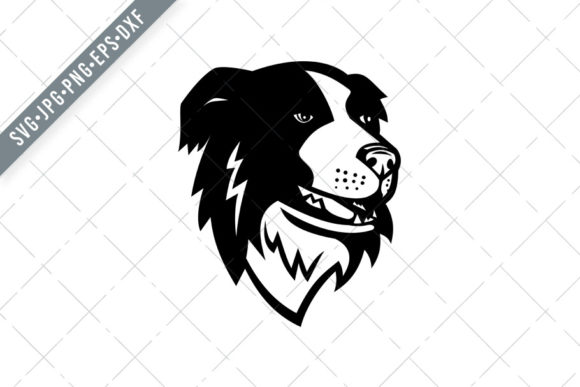
Head of Border Collie Scottish Sheepdog – A Retro Mascot for Modern Design Projects
If you design regularly, you know the search for a versatile, clean mascot illustration can take hours. The Head of Border Collie Scottish Sheepdog stands out because it combines the iconic look of a working herding breed with a retro black and white style that works across countless mediums. Whether you run a small print shop, create content for social media, or design party invites for friends, having a file set that includes SVG, PNG, DXF, EPS, and JPG means you can move from screen to product without extra conversion headaches. But getting the best results from this kind of resource isn't automatic. Many creatives run into avoidable problems that waste time, ruin print quality, or mess with licensing expectations. Let's walk through what this design actually offers, where people commonly slip up, and how you can use it effectively from day one.
What Exactly Is This Head of Border Collie Scottish Sheepdog Set?
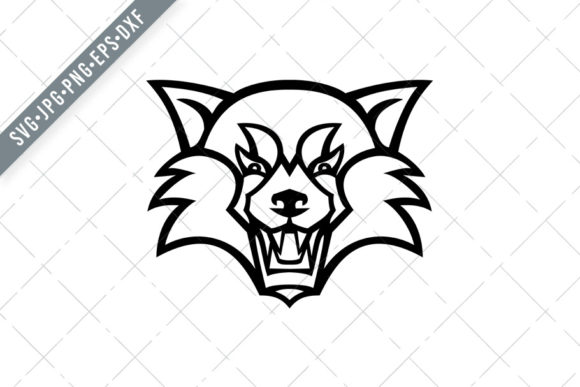
This is not a photograph or a complex digital painting. It is a stylized, front-facing illustration of a Head of Border Collie Scottish Sheepdog rendered in a retro black and white look. The clean lines and high contrast make it ideal for cutting machines, screen printing, and monochrome branding. The zip download includes five distinct file types: SVG for Cricut and Silhouette Cameo, PNG at 300 dpi sized at least 10 inches or bigger, DXF for certain CAD-like workflows, EPS for professional vector software, and JPG for quick previews or low-stakes uses. The files are designed for non-exclusive use only—meaning you can incorporate them into your own projects and sell the final physical products, but you cannot resell or redistribute the digital files themselves. This is a common licensing structure that many new buyers misunderstand.
Common Mistake 1 – Choosing the Wrong File Format for Your Machine or Software
One of the most frequent errors I see is designers grabbing the JPG or PNG first because it looks familiar, then struggling when their cutting machine refuses to trace it properly. The Head of Border Collie Scottish Sheepdog set gives you multiple vector formats precisely to avoid this friction.
Why it happens: People who are new to SVG or DXF assume those formats are complicated to use. They stick with what they know, even if it means lower quality or extra steps.
How it affects your results: Using a raster format like JPG or PNG for a cut file forces you to manually trace the outlines in software like Cricut Design Space or Silhouette Studio. That adds time, introduces inaccuracy, and often leads to jagged edges or missed details on the dog's fur and ear shapes. If you are making a stencil or iron-on transfer, those imperfections become obvious on the finished product.
Better approach: Always start with the SVG file for Cricut or Silhouette. SVG is vector-based, so it scales perfectly and includes built-in cut lines. If your software supports it, the DXF is also a reliable choice. Open the SVG directly, resize without losing quality, and send it to your machine. You will save at least fifteen minutes per project and get a cleaner result. Test the SVG on a scrap piece of material first to confirm the cut settings work for your specific material thickness.
Common Mistake 2 – Overlooking Resolution and Size Requirements for Print Projects
The Head of Border Collie Scottish Sheepdog PNG comes at 300 dpi and at least 10 inches or bigger, which is excellent for most print needs. Yet I have seen designers try to use the JPG or a scaled-down PNG for large-format prints and end up with pixelation that ruins the retro feel.
Why it happens: It is easy to assume any file in the set will work for any purpose. The JPG is a compressed, lower-quality version designed for quick previews or web use. The PNG is the print-ready raster option, but only if you use it at or below its native size.
How it affects your results: Blowing up the PNG beyond 10 inches can introduce softness or even jagged edges. For a mascot with clean black and white lines, pixelation is immediately noticeable and looks unprofessional. If you need a larger print for a banner or poster, you should not be using the PNG at all—you should use the SVG or EPS to ensure infinite scalability.
Better approach: Match your file format to the final output size. For small-format items like cards, mugs, or stickers, the PNG at 300 dpi is fine. For anything larger than 10 inches, switch to SVG or EPS. Those vector files have no size limit. You can scale the Head of Border Collie Scottish Sheepdog to 24 inches or more without losing a single line of detail. Always preview at 100% zoom before printing to check for any issues.
Common Mistake 3 – Misunderstanding the Non-Exclusive Use License
This is where even experienced entrepreneurs slip up. The Head of Border Collie Scottish Sheepdog set is for non-exclusive use only. That means you can use it to create physical products like T-shirts, mugs, wall art, and greeting cards, and you can sell those physical items. What you cannot do is sell or give away the digital file itself, bundle it with other design assets in a digital pack, or claim exclusive ownership of the illustration.
Why it happens: Copyright and licensing language can be dry and easy to skip. Many buyers assume that because they paid for the download, they own the artwork outright. That is not the case here.
How it affects your results: Violating the license might seem harmless if you are only sharing files with a friend, but if you run an Etsy shop or a print-on-demand store, you risk having your listings removed or facing a legal claim. Even if you think nobody will notice, the license exists to protect the artist's ongoing ability to sell the same design to others. Ignoring it can disrupt your business.
Better approach: Read the license terms provided in the download or product page before you use the files. Keep a copy of the license for your records. If you want to create products that require exclusive rights, contact the artist to negotiate a separate agreement. Otherwise, focus on the many things you can legally do: print on apparel, create home decor, design scrapbook pages, make party invites, and sell the resulting physical goods. That covers the vast majority of creative projects.
Common Mistake 4 – Ignoring the Retro Black and White Style Constraints
The Head of Border Collie Scottish Sheepdog is deliberately rendered in a retro, monochrome style. That is a strength, but it can also be a limitation if you treat it like a full-color illustration.
Why it happens: Some designers download the file and immediately try to recolor it or add gradients, not realizing the beauty of the design lies in its high-contrast simplicity. The vector files (SVG, EPS) do allow you to change fill colors, but the line work and shading are structured for black and white. Adding complex color overlays can muddy the retro aesthetic.
How it affects your results: If you force a multicolor look onto a design built for monochrome, you might lose the crisp, bold impact that makes it suitable for screen printing, engraving, or foil stamping. You also risk overcomplicating your production process. For example, a single-color screen print is cheap and fast. A multicolor print requires additional screens, registration, and cost.
Better approach: Embrace the black and white style as a feature, not a bug. Use it for projects where high contrast and clean lines shine—think stencils, T-shirt prints with one or two colors, sticker sheets, and branding materials. If you want to add a subtle accent, try printing on a colored substrate (like a charcoal gray shirt) and leaving the design in black or white. That preserves the retro feel while giving you variety. When you need a full-color mascot, look for a different resource made for that purpose.
Common Mistake 5 – Rushing the Download and File Organization
The zip file contains SVG, PNG, DXF, EPS, and JPG versions. I have watched people download the zip, open the JPG to preview it, and then lose track of where the SVG ended up. Later, when they need the cut file, they cannot find it and assume it is missing.
Why it happens: Zip downloads are convenient, but they also encourage a quick extract-and-forget habit. If you do not rename or organize the files immediately, they blend in with dozens of other downloads.
How it affects your results: Disorganized files lead to repeated downloads, confusion about which version is which, and wasted time hunting for the right format. If you are working on a deadline, that friction can be frustrating enough to make you settle for a lower-quality file.
Better approach: Create a dedicated folder on your computer for design assets, and inside it, a subfolder for this Head of Border Collie Scottish Sheepdog set. Extract all files into that folder. Rename each file with a clear label, such as “BorderCollie_SVG_cutfile” or “BorderCollie_PNG_print_300dpi.” Keep the license file in the same folder. That way, you know exactly where everything is before you start your project. When you need to use the design again months later, you will not have to hunt through your downloads.
Practical Checklist Before You Start Creating
- Confirm your software compatibility: If you use Cricut Design Space, open the SVG. If you use Silhouette Studio, the SVG or DXF both work. Illustrator users should go for EPS or SVG.
- Test a small sample first: Cut or print a single test piece on inexpensive material to verify scale and detail before producing in bulk.
- Check your material settings: Black and white vector art performs differently on vinyl, cardstock, fabric, and wood. Adjust blade depth, speed, and pressure accordingly.
- Review the license once more: If you plan to sell physical products, you are covered. If you want to share the digital file, you are not.
- Back up your files: Store the zip and the extracted set in at least two locations—your hard drive and cloud storage—so you never lose access to the vector formats.
Making the Most of This Mascot Design
The Head of Border Collie Scottish Sheepdog illustration is a practical, stylish resource for anyone who creates physical or digital products. Its retro black and white character makes it stand out in a world of overcomplicated graphics, and the file variety ensures you can use it for cutting, printing, or digital design without extra conversion steps. By avoiding the common mistakes around format choice, resolution limits, licensing misunderstandings, style expectations, and file organization, you set yourself up for smooth production and professional results. Whether you are making shirts for a dog event, designing stickers for your small business, or putting together scrapbook pages for a personal project, this mascot can deliver exactly the look you want—if you use it the right way from the start.