The Rise of the Angry Red Panda Mascot: Retro Illustration Meets Modern Branding
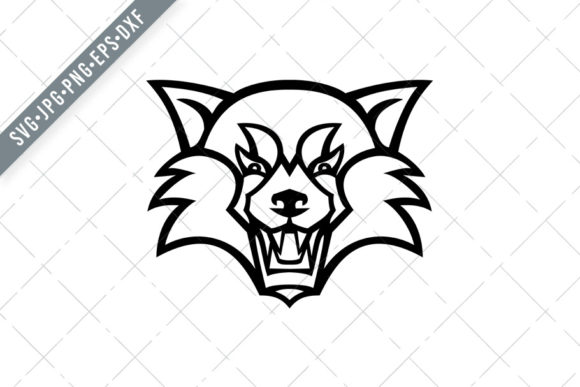
In the ever-evolving landscape of visual branding and creative design, the demand for distinctive, expressive, and versatile mascot illustrations has never been higher. Among the most compelling contenders in this space is the Head of an Angry Red Panda — a bold, retro black-and-white depiction of the lesser panda, also known as the red bear-cat or red cat-bear. This is not merely a cute animal graphic; it is a carefully crafted character asset that bridges vintage aesthetics with contemporary digital workflows. For professionals, creators, entrepreneurs, marketers, freelancers, and enthusiasts alike, this mascot illustration represents a powerful tool for storytelling, brand identity, and product personalization.
The Head of an Angry Red Panda is a front-facing, high-impact illustration that captures the animal's distinctive facial features — the broad cheeks, expressive eyes, and bold facial markings — all rendered in a retro black-and-white style. The illustration exudes personality: an unmistakable expression of anger or determination that gives it a memorable, almost iconic quality. The design is intentionally isolated on a clean background, making it immediately usable across a wide range of media and applications. The accompanying asset package includes SVG vector files for Silhouette Studio Cameo and Cricut, PNG files at 300 DPI (at least 10 inches or larger), DXF, EPS, and JPG formats. This multiformat approach ensures that whether you are cutting vinyl, screen printing, creating digital content, or designing print materials, the red panda head is ready to deploy without the need for tedious conversion or scaling work.
The Retro Black-and-White Aesthetic: A Strategic Choice for Modern Creators
The choice of a retro black-and-white style for the Head of an Angry Red Panda is far from arbitrary. In a visual culture saturated with hyper-realistic, full-color, and often chaotic imagery, there is a growing appreciation for the clarity, boldness, and timelessness of monochrome design. The black-and-white palette evokes a sense of nostalgia — reminiscent of vintage posters, classic comic strips, and mid-century advertising — while also offering unmatched versatility. For creators working across different mediums, from digital screens to physical goods, a monochrome vector illustration simplifies production, reduces cost, and eliminates color-matching challenges.
This trend toward retro and minimalist aesthetics is well-documented in the broader creative and marketing industries. Brands are increasingly leveraging vintage-inspired visuals to stand out in crowded digital and physical spaces. The Head of an Angry Red Panda fits squarely within this movement. Its black-and-white treatment makes it equally effective as a standalone graphic on a white t-shirt or as a layered element in a complex poster composition. The angry expression adds an edge that differentiates it from the overwhelmingly positive or neutral animal mascots that dominate the market, giving it a distinctive voice that resonates with audiences looking for authenticity, attitude, and character depth.
Why the Angry Red Panda Is Capturing Attention
Several converging factors explain why the Head of an Angry Red Panda is drawing significant interest from professionals and enthusiasts. First, the red panda itself is a uniquely charismatic animal. Unlike the more common lion, wolf, or bear mascots, the red panda brings a sense of rarity and curiosity. Its visual features — the round face, pronounced ears, and striking facial markings — translate exceptionally well into bold, graphic illustration. The choice to depict it with an angry expression adds a layer of emotional complexity that invites connection. In an era where consumers value brands and products that express clear values and personality, a mascot that projects determination, defiance, or even playful irritation can be surprisingly effective.
Second, the multiformat delivery of the Head of an Angry Red Panda addresses a real and persistent pain point for creators. The inclusion of vector formats like SVG, DXF, and EPS means that the illustration is resolution-independent and fully scalable. Whether you are engraving a small coaster or printing a large wall mural, the artwork maintains crisp, clean lines without pixelation. The 300 DPI PNG ensures that users without vector software can also access high-quality print-ready files. The inclusion of a JPG version offers further flexibility for quick previews or web use. This careful attention to file variety saves time, reduces frustration, and lowers the technical barrier for creators at all skill levels.
Third, the Head of an Angry Red Panda arrives at a moment when the creator economy and the print-on-demand (POD) industry are booming. Independent entrepreneurs, small business owners, and freelance designers are constantly seeking distinctive, licensable assets that can be rapidly adapted to products. The angry red panda head fits this need perfectly. Its retro style aligns with current fashion and decor trends, while its expression gives it a distinctive hook that generic animal graphics lack. The ability to instantly use the SVG file with a Cricut or Silhouette machine for custom t-shirts, mugs, and signage is a substantial time-saving advantage.
Changing Needs, Preferences, and Workflows in Creative Production
The engagement with the Head of an Angry Red Panda also reflects broader shifts in how professionals and enthusiasts approach creative projects. One of the most significant changes is the expectation of immediate, frictionless usability. Today's creators do not want to spend hours tracing, converting, or cleaning up artwork. They want files that are production-ready out of the box. The SVG vector format is particularly important here. It allows for seamless import into software like Adobe Illustrator, Inkscape, and design applications used with cutting machines. The DXF format extends compatibility to CAD-based workflows and older software, while the EPS file remains a industry standard for professional print and graphic design. The inclusion of these formats reflects a deep understanding of the diverse technical environments in which creators operate.
Another important trend is the increasing preference for personality-driven design assets. The angry red panda head is not a neutral, passive image. It carries an emotional charge. In product design, this emotional quality translates into higher perceived value and stronger customer engagement. A mug or t-shirt featuring this mascot is not just a utility item; it becomes a statement piece. The angry expression can be interpreted as fierce determination, quirky rebellion, or humorous frustration — making it versatile across different brand voices and product lines. This emotional versatility is a key reason why expressive mascots are gaining traction in merchandise and branding strategies.
Additionally, the retro black-and-white style aligns with the growing interest in sustainable and minimalist design. Monochrome printing uses less ink, reduces production complexity, and often results in longer-lasting, fade-resistant designs. For creators producing physical goods, this is a practical advantage. It also enables the design to work on colored substrates (such as dark t-shirts, colored mugs, or wooden surfaces) without requiring white underbases or complex color separations. This streamlining of production processes is highly valued by small-batch creators and print-on-demand sellers who need to keep per-unit costs low while maintaining quality.
Practical Applications Across Industries and Projects
The versatility of the Head of an Angry Red Panda is best illustrated through concrete examples of its use. For the apparel creator, the SVG file can be loaded directly into a cutting machine to produce iron-on vinyl decals for t-shirts, hoodies, or tote bags. The bold, clean lines of the design ensure that even small cuts maintain legibility. For home decor enthusiasts, the PNG file can be printed and framed as wall art, or the vector file can be used for stencil creation on furniture, walls, or canvas. The angry red panda's strong silhouette works beautifully as a stencil, allowing for consistent reproduction across multiple surfaces.
For event and party planners, the Head of an Angry Red Panda can be used in invitations, banners, cards, and scrapbooking projects. The retro black-and-white look pairs well with vintage-themed events, wildlife conservation fundraisers, or even quirky birthday parties. The availability of multiple file formats means that a single design can be adapted for digital invitations (using the JPG or PNG), printed signage (using the PDF-capable EPS or high-res PNG), and cut decorations (using the SVG or DXF). This cross-format compatibility is a major efficiency gain for busy professionals.
Entrepreneurs and marketers can leverage the mascot for brand merchandise, social media graphics, and promotional materials. The expressive nature of the Head of an Angry Red Panda makes it ideal for items like stickers, pins, magnets, and patches — all of which are popular in e-commerce and direct-to-consumer sales. The design's boldness ensures it remains visible and recognizable even in small sizes, a critical factor for accessories and novelties. The SVG and EPS files are perfectly suited for creating clean, scalable logos or secondary brand marks that reinforce a company's identity.
Connecting the Red Panda to Larger Creative and Market Developments
Beyond its individual applications, the emergence of the Head of an Angry Red Panda as a sought-after asset reflects several larger developments in the creative economy. The first is the democratization of design tools. With affordable cutting machines, print-on-demand platforms, and design software now widely accessible, individuals and small teams can produce professional-grade products from home. This shift has created a massive demand for high-quality, licensable, and ready-to-use vector artwork. The angry red panda head is a direct response to this need.
Second, there is a growing cultural appetite for expressive, character-driven content. In a digital landscape dominated by algorithms and generic stock imagery, audiences gravitate toward visuals that feel human, flawed, and emotionally resonant. The angry red panda, with its distinctive expression, offers exactly that. It taps into the same appeal that drives the popularity of emoticons, reaction memes, and mascot-based branding across industries from gaming to food and beverage. The retro styling adds a layer of authenticity and craftsmanship that further differentiates it from mass-produced clip art.
Third, the focus on format variety in the asset package reflects a broader industry recognition that creators operate across multiple platforms and output devices. A single design may need to appear on a phone screen, a large-format poster, a vinyl decal on a water bottle, and an embroidered patch on a hat. Delivering the Head of an Angry Red Panda in SVG, PNG, DXF, EPS, and JPG formats ensures that it can be used across all these scenarios without loss of quality or fidelity. This is not a luxury; it is a basic expectation in modern creative workflows.
Practical Guidance for Using the Angry Red Panda Head
For those considering integrating the Head of an Angry Red Panda into their projects, a few practical observations can help maximize its impact. First, because the design is monochrome and high-contrast, it works exceptionally well on light and dark backgrounds alike. However, for cutting machines, ensure that the SVG or DXF file is imported with appropriate scaling — the 10-inch or larger PNG size gives a good reference point. Second, consider pairing the angry red panda head with bold typography or geometric accents to reinforce the retro aesthetic. The design's strong, centered composition allows it to function as a focal point or as part of a larger layout. Third, experiment with different substrates: the illustration shines on matte paper, cotton fabric, ceramic, wood, and even metal when used with appropriate transfer methods.
The file package also supports layered editing in vector software. Users can adjust line weights, invert colors, or add custom backgrounds while maintaining sharpness. For professionals working with Silhouette Studio or Cricut Design Space, the SVG file is particularly valuable because it preserves the vector paths needed for precise cutting. The PNG file at 300 DPI and 10-inch size guarantees high-resolution output for print projects that require fine detail. The EPS file is the best choice for legacy design software or workflows that require PostScript compatibility.
Conclusion: A Mascot for the Modern Creator
The Head of an Angry Red Panda is far more than a charming illustration. It is a strategic asset that aligns with the most important trends in modern creative production: the demand for expressive, character-driven design; the shift toward retro and minimalist aesthetics; the need for multiformat, production-ready files; and the rise of the independent creator economy. For professionals, entrepreneurs, marketers, freelancers, and enthusiasts, this mascot offers a rare combination of emotional impact, practical versatility, and timeless style. Whether you are launching a merchandise line, designing a brand identity, or simply creating something memorable for a personal project, the angry red panda head delivers the visual punch and functional flexibility that today's projects demand.
As the boundaries between digital design, physical production, and brand storytelling continue to blur, tools like this become essential. The Head of an Angry Red Panda is not just a file download; it is a gateway to creative expression and commercial opportunity. With its retro black-and-white style, expressive face, and comprehensive format support, it is ready to become the centerpiece of your next project — whether that is a t-shirt, a mug, a stencil, wall art, a greeting card, an invitation, or anything else you can imagine. The only question is where you will put it first.