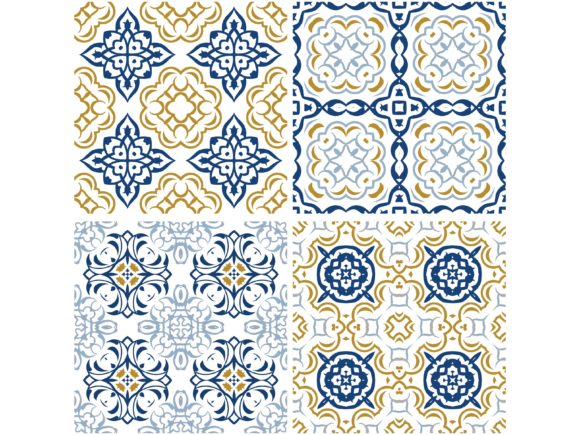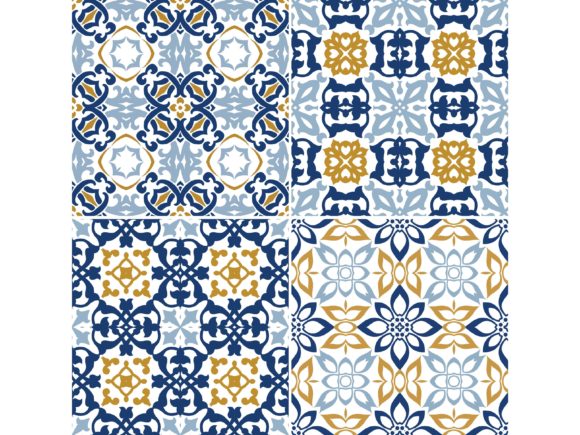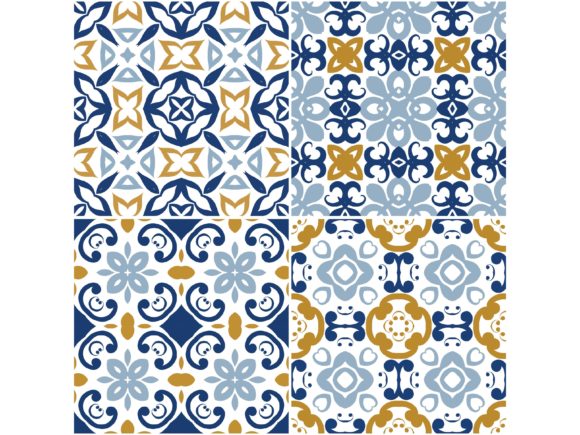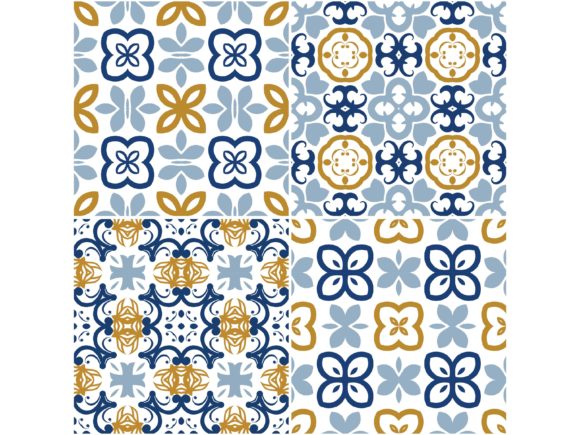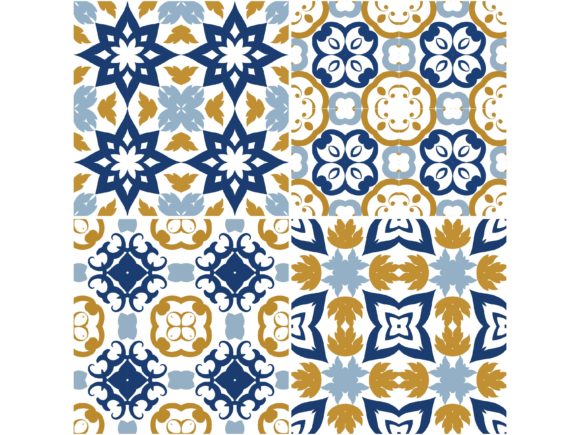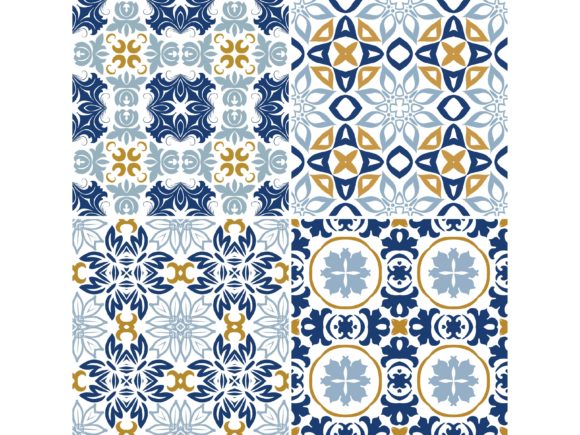
Vintage Tile Retro Interior
If you are working on a design project that calls for mid-century charm, patterned surfaces, or a nostalgic aesthetic, you have likely come across the Vintage Tile Retro Interior collection. This set of design assets offers a range of tile patterns inspired by retro interior styles, and it is marketed as a versatile resource for creative work. Before integrating it into your workflow, it helps to understand what the collection actually contains, what it does well, where it may fall short, and how to decide if it suits your specific project requirements. This article provides a practical, balanced evaluation so that you can make an informed choice.
The Vintage Tile Retro Interior collection is built around a series of tile designs that evoke the look of classic mid-century kitchens, bathrooms, and accent walls. The package includes an Adobe Illustrator file (AI), an EPS file, a PNG file, and a JPG file for each tile pattern. This combination of formats is intended to support a wide range of uses, from print applications to digital mock-ups. The tiles themselves generally feature geometric shapes, repeating motifs, and color palettes that reference the 1950s, 1960s, and early 1970s. For designers, illustrators, or content creators who need ready-to-use retro elements, this collection is presented as a time-saving option.
What Makes the Collection Appealing
The primary draw of Vintage Tile Retro Interior lies in its cohesion and convenience. Rather than sourcing individual tile patterns from multiple locations or creating them from scratch, you get a curated set that shares a consistent visual language. This can be especially valuable when you need to maintain a unified look across a project, such as a branding package, a set of social media graphics, or a series of product labels. The inclusion of vector formats (AI and EPS) means the tiles can be scaled without loss of quality, which is essential for both large-format printing and small digital icons. The PNG files offer a transparent background option, making it easier to layer tiles over other design elements. The JPG files, while lossy, provide a quick way to preview or use the tiles in contexts where file size matters more than absolute fidelity.
Another reason designers look at this collection is the aesthetic itself. Retro and vintage styles have maintained a steady presence in interior design, branding, and illustration. A tile pattern that recalls a classic diner floor or a vintage bathroom wall can add warmth and character to an otherwise modern layout. Whether you are designing a poster for a retro-themed event, creating packaging for a handmade product, or building a mood board for a renovation project, having a library of tiles that fit that style can streamline your process. The Vintage Tile Retro Interior collection attempts to deliver that library in a single download.
Practical Benefits and Tradeoffs
When evaluating any asset pack, it is important to weigh what you gain against what you may have to compromise. For this collection, the benefits are fairly straightforward. First, the file format variety reduces the need to convert files yourself, which can be a time saver. Second, the vector files allow for custom resizing and recoloring, assuming you or someone on your team has access to vector editing software. Third, the patterns are pre-designed, which eliminates the initial creative block of coming up with a tile layout. For a one-person studio or a small team working under a tight deadline, these advantages can be significant.
However, there are tradeoffs to consider. Because the tiles are part of a fixed collection, you are limited to the patterns, colors, and scales that the creator chose. If your project requires a very specific tile shape, a custom color palette that does not appear in the set, or a non-standard arrangement, you will need to either modify the existing files or look elsewhere. The AI and EPS files do offer some editing flexibility, but that flexibility depends on your skill level and the complexity of the original artwork. Additionally, the collection is intended for creative projects, but it is not an interior design tool. The tiles are graphical representations, not CAD-ready elements, so they are best used for visual mock-ups, branding, and illustration rather than for architectural planning or material specification.
Another consideration is the retro style itself. While the vintage look is popular, it is also a specific taste. If your audience or client does not connect with mid-century aesthetics, the collection may not be the right fit. The patterns are designed to evoke a particular era, and that era may not align with every brand or project. Being objective about the style's relevance to your specific context is an important step before purchasing.
Scenarios Where Vintage Tile Retro Interior Shines
There are several situations where this collection is likely to be a strong fit. If you are creating digital content for a business that wants a nostalgic or retro feel, such as a café, a barbershop, a vintage clothing store, or a craft brewery, these tiles can be used as background patterns, accent graphics, or social media templates. The consistent style across the patterns helps establish a cohesive brand identity without requiring you to design multiple assets from scratch. For print projects like flyers, menus, or product packaging, the vector files ensure that the pattern remains sharp at any size, and the PNG files allow for easy compositing in photo editing software.
Another strong use case is in educational or personal projects. If you are teaching yourself graphic design, putting together a portfolio piece, or creating a one-off invitation or card, the Vintage Tile Retro Interior collection provides a low-cost, low-effort way to incorporate professional-looking patterns. The included formats mean you can work in the software you are most comfortable with, whether that is Adobe Illustrator, Affinity Designer, or even a simpler editor that supports PNG or JPG. For hobbyists or students who need a quick visual result, this can be a practical resource.
The collection also works well for mood boards and concept work. If you are an interior designer or a home renovation enthusiast gathering inspiration, having a set of retro tile patterns can help you communicate a look to clients or collaborators. You can drop the PNG tiles into a mood board or a digital collage to show how a pattern might appear in a real space. While the tiles are not photorealistic, they are detailed enough to convey the general aesthetic and color direction.
When Alternatives May Be Worth Considering
There are also clear situations where looking beyond this collection is advisable. If you need a highly specific tile pattern that matches a particular historical era or a manufacturer's discontinued line, a generic set of retro patterns may not provide the accuracy you require. In that case, researching archival patterns, commissioning a custom design, or using a pattern generator tool would be more appropriate. The same applies if your project demands a tile design that is completely unique or tied to a very niche sub-style, such as Art Deco or Victorian revival, which this collection does not claim to cover.
If your work involves 3D rendering or architectural visualization, the Vintage Tile Retro Interior collection may be less useful. The files are 2D vector and raster images, not texture maps or material definitions for software like Blender, SketchUp, or Revit. While you could potentially use the PNG files as image textures, you would need to adjust tiling, scaling, and mapping yourself, and the results may not be as seamless as a purpose-built texture set. For 3D work, a dedicated texture library or a pattern generator that outputs PBR materials would likely save you more time and produce a more polished result.
Another scenario to consider is when you need a very large number of patterns or a systematic variation of designs. This collection offers a finite set of tiles. If you are designing a multi-page document, a full wall mural, or a product line that demands dozens of distinct patterns, you may run out of variety quickly. In that case, a subscription to a larger asset library or a pattern design tool that lets you create infinite variations may be a better investment. Similarly, if your workflow relies heavily on collaborative file formats or cloud-based asset management, you should check whether the file formats included in the collection integrate smoothly with your toolchain. While AI, EPS, PNG, and JPG are widely supported, some modern collaborative platforms favor SVG, WebP, or cloud-native formats.
Practical Decision-Making Insights
To decide whether the Vintage Tile Retro Interior collection aligns with your goals, start by clarifying the scope and style of your project. Ask yourself whether the mid-century look is essential to the concept or simply one option among several. If retro is a core requirement, the collection may be a solid starting point. If you are exploring different directions, it is worth looking at a range of pattern sets to see which one best fits your vision. Do not assume that one retro tile pack covers all vintage styles. Review the actual images in the collection to confirm that the patterns and colors match what you have in mind.
Next, consider your technical needs. If you work primarily in vector software and you want the ability to tweak colors or scale patterns without quality loss, the AI and EPS files are valuable. If you rely on raster-based tools and need ready-to-use images with transparency, the PNG files serve that purpose. If you only need quick previews or low-resolution placeholders, the JPG files are sufficient. Think about the weakest link in your workflow. If you do not have access to vector editing software, the AI and EPS files will be opaque to you, and you will be limited to the PNG and JPG versions. That is fine for many uses, but it reduces the flexibility that the collection advertises.
Finally, compare the cost of this collection to the value of the time it saves you and the quality of the result. If designing a single custom retro tile pattern takes you several hours and you need five or more patterns, purchasing a curated set may be cost-effective. If you only need one pattern and you have the skills to create it quickly, a single custom design or a free pattern resource may serve you better. Be realistic about how much you will actually use the collection. Graphic designers and illustrators who frequently work on retro-themed projects are the most likely to benefit. For someone with a one-off need, a free or lower-cost alternative may be sufficient.
Helping You Decide
The Vintage Tile Retro Interior collection is a tool, not a solution. It works best when your project aligns with its specific aesthetic and format offerings. If you need a quick, cohesive set of retro tile patterns for branding, print, or digital design, and you are comfortable working with AI, EPS, PNG, or JPG files, this collection is worth considering. It provides consistency, format flexibility, and a clear vintage style that can be applied across multiple media. However, if your project demands a high level of pattern customization, a different historical period, 3D compatibility, or a very large volume of unique designs, you would be better served by a different resource or by creating custom assets. By evaluating your project requirements honestly and comparing them against the collection's strengths and limitations, you can make a choice that supports your creative goals without overinvesting in assets that do not quite fit.